


How Is Artificial Intelligence Transforming the Pharmacy Profession in 2026?
Introduction
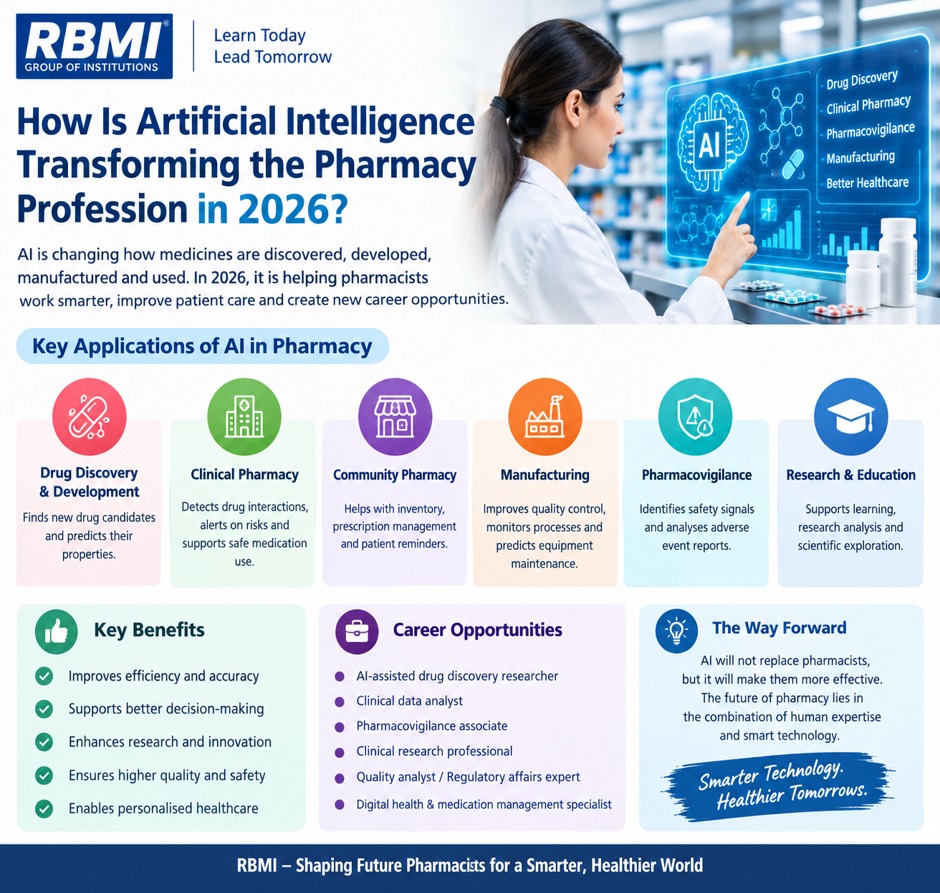
Artificial Intelligence (AI) is transforming the healthcare industry, and pharmacy is one of the fields experiencing significant technological change. In 2026, AI is increasingly being explored to support drug discovery, pharmaceutical research, clinical decision-making, medication safety, hospital pharmacy services, and pharmaceutical manufacturing.
Challenges and Limitations of AI in Pharmacy
Although AI offers promising opportunities, its implementation also presents important challenges.
· Data privacy: Patient and research data must be handled securely and lawfully.
· Accuracy: AI tools can produce incorrect, incomplete, or misleading information.
· Bias: Poorly representative datasets can lead to unequal or unreliable outcomes.
· Accountability: Clear professional responsibility is essential when AI influences medication-related decisions.
· Regulatory compliance: AI-supported processes must meet applicable pharmaceutical, clinical, and data-protection requirements.
· Skill gaps: Pharmacy professionals need training to evaluate AI outputs critically.
Career Opportunities in AI-Enabled Pharmacy
The integration of AI and pharmaceutical sciences is creating opportunities for pharmacists who develop relevant technical and analytical skills. These roles vary by employer, qualifications, experience, and regulatory requirements.
Potential career pathways include:
1. AI-Assisted Drug Discovery Researcher- Supports computational screening and early-stage drug research.
2. Clinical Data Analyst- Analyses healthcare and clinical research datasets.
3. Pharmacovigilance Associate- Uses digital tools to organise and evaluate medicine-safety information.
4. Clinical Research Professional- Supports clinical trial data management, monitoring, and research documentation.
5. Pharmaceutical Quality Analyst- Works with process data, quality trends, and automated inspection systems.
6. Regulatory Affairs Professional- Supports regulatory documentation, data review, and compliance activities.
7. Computational Pharmacology Researcher- Applies molecular modelling, docking, and predictive methods to pharmaceutical research
The Future of Pharmacy: Human Expertise Meets Artificial Intelligence
The future of pharmacy will depend not only on advances in technology but also on the ability of professionals to use these tools safely and effectively.
AI may increasingly support drug development, medication management, pharmaceutical manufacturing, drug-safety monitoring, and clinical research. At the same time, pharmacists will continue to contribute essential expertise in patient counselling, therapeutic evaluation, ethical decision-making, and the responsible use of medicines.
The pharmacist of the future will need to understand both medicines and the technologies used to support their development and use. Digital literacy, scientific reasoning, adaptability, and patient-centred communication will therefore remain valuable professional skills.
Conclusion
Artificial Intelligence is becoming an important part of the changing pharmacy landscape in 2026. From drug discovery and clinical pharmacy to pharmacovigilance, manufacturing, and pharmaceutical education, AI offers new ways to analyse information and support professional work.
For students at RBMI, learning about AI alongside core pharmacy subjects can provide a foundation for exploring emerging research and career opportunities. By combining pharmaceutical expertise with digital skills and a commitment to patient safety, future pharmacists can contribute to a more innovative, efficient, and responsible healthcare system.