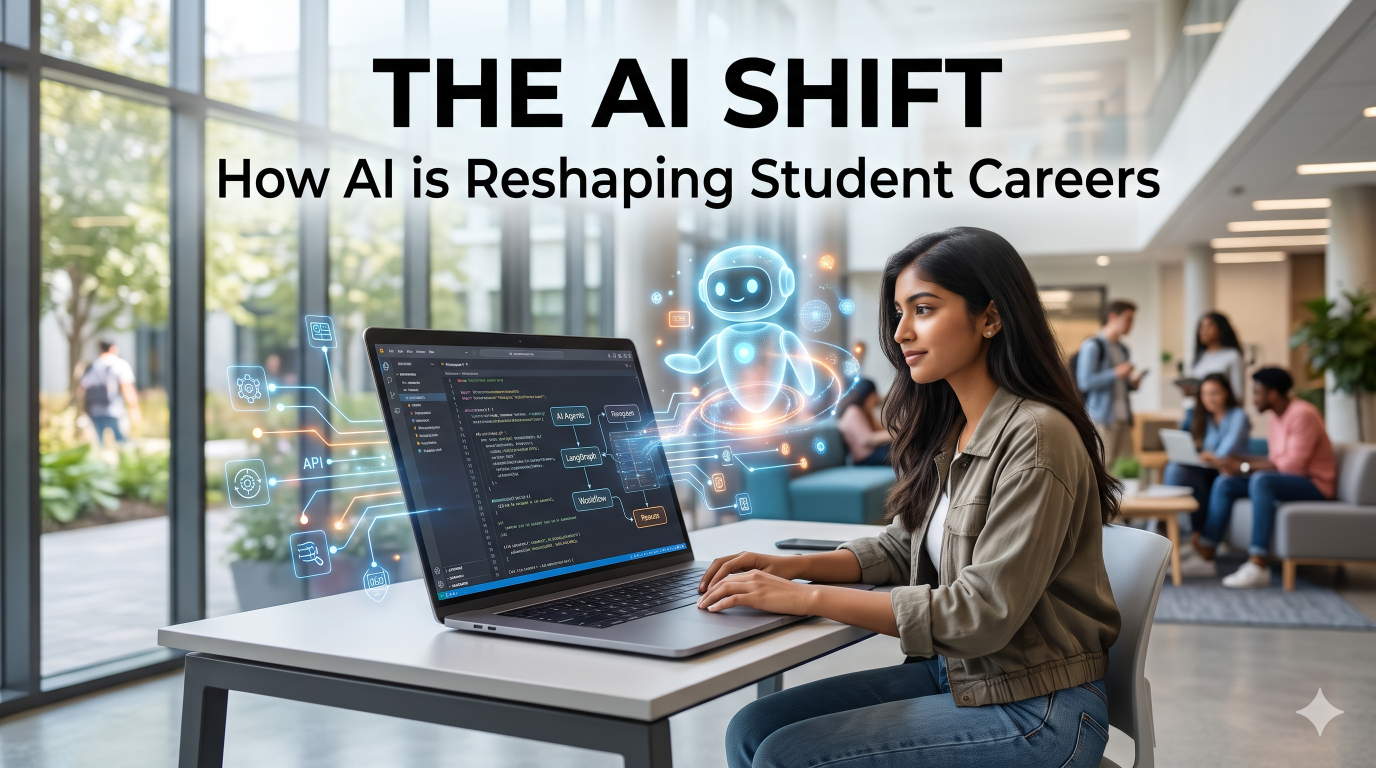
The AI Shift: How Cutting-Edge Research is Reshaping Student Careers
Artificial intelligence is no longer just a buzzword confined to university research labs; it is actively rewriting the rules of the global job market. Recent breakthroughs in AI research—specifically the leap from basic conversational chatbots to Agentic AI (autonomous systems that can plan and execute multi-step workflows) and Retrieval-Augmented Generation (RAG) — are fundamentally changing what employers expect from fresh graduates. For today’s students, this rapid technological shift presents both a sharp wake-up call and an unprecedented career launchpad.
The Reality Check: Entry-Level Disruption
Recent labour market data reveals that traditional entry-level roles are feeling the immediate squeeze of intelligent automation. A landmark Harvard University study tracking 62 million workers found that junior positions have steadily shrunk at firms aggressively integrating AI into daily operations. Similarly, a Stanford University analysis highlighted a 13% relative employment decline for workers aged 22–25 in highly AI-exposed sectors such as entry-level coding, content creation, and basic data analysis. University students are feeling this pressure first-hand. A November 2026 senior survey by The Harvard Crimson revealed that 1 in 5 graduates have already altered their career plans due to AI, while 57% believe it is a significantly more challenging time to enter the workforce compared to just a few years ago.
The Silver Lining: Massive Demand for AI-Fluent Talent
While routine junior tasks are being automated away, the World Economic Forum’s 2026 Future of Entry-Level Work report emphasises that forward-thinking organisations are redesigning early-career roles around human–AI collaboration rather than eliminating entry-level talent pipelines. In fact, hiring for AI-capable graduates is booming across industries:
·
- Surging Opportunities: According to NASSCOM’s 2026 India AI Talent Report, AI job postings are projected to grow by 32% year-on-year, with India alone needing nearly 1 million AI-skilled professionals by 2027.
- Embedded Roles: Over half of new AI-related hires aren't pure machine learning engineers—they are marketers, business analysts, and finance graduates embedding AI tools into traditional workflows.
The Agentic AI Boom: New Roles and Must-Have Skills
Driving this hiring wave is the explosive rise of Agentic AI, with demand for specialised talent surging over 260% year-on-year in India. Rather than simply writing prompts, fresh graduates are being hired into emerging roles like Agentic AI Developers, AI Automation Specialists, AI Evaluation & QA Specialists, and Associate AI Product Owners. To land these positions, employers prioritise practical, production-ready skills over course certificates, specifically Python, orchestration frameworks like LangGraph or CrewAI, tool-calling via the Model Context Protocol (MCP), and the systems thinking required to design safe, reliable human-in-the-loop workflows.
In the AI era, your university degree gets you noticed, but your ability to orchestrate intelligent tools will get you hired.
Dr. Udit Agarwal