

Quick Commerce and the Changing Indian Consumer
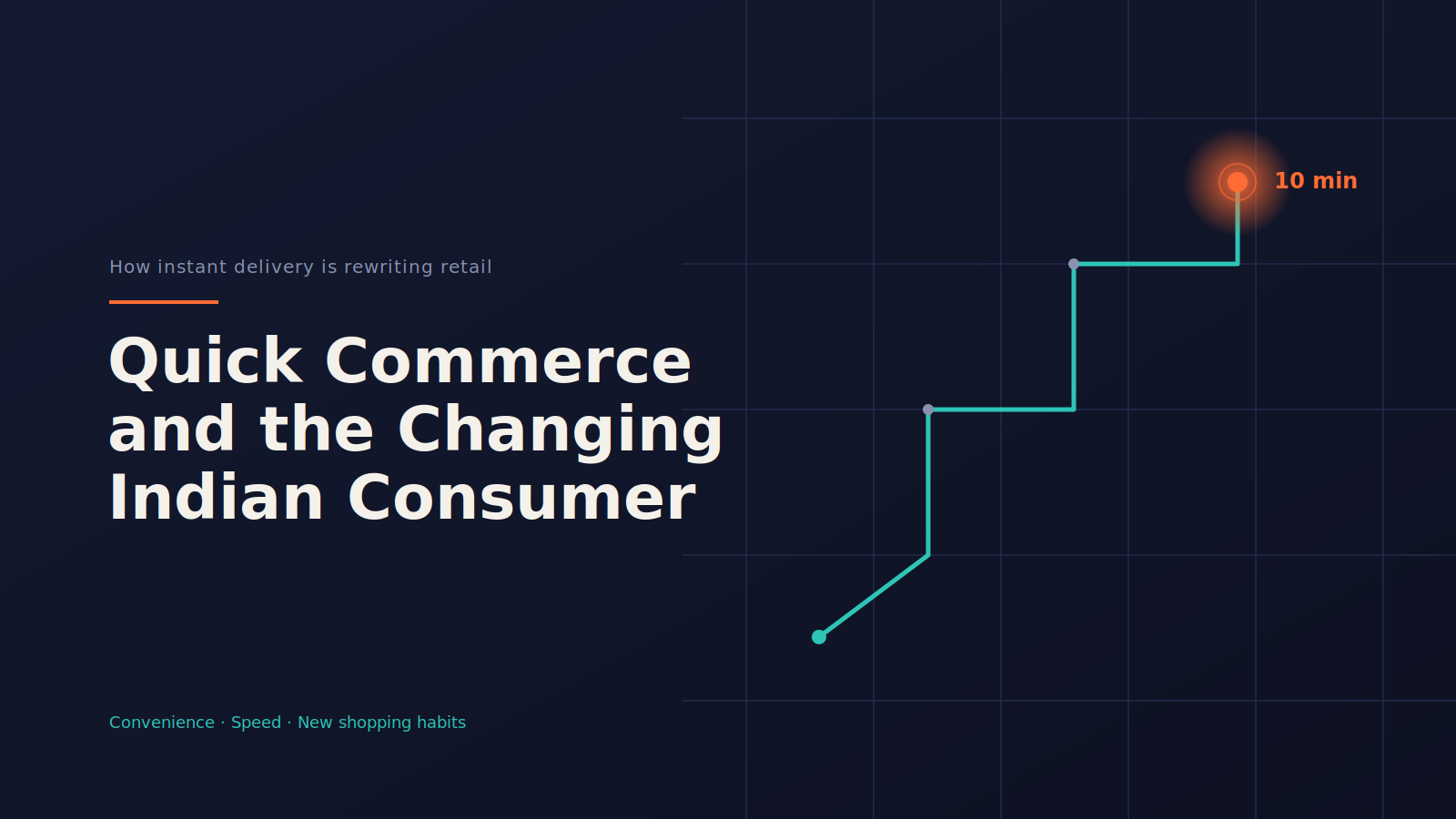
Quick commerce has become an important part of India's evolving retail landscape. The model focuses on delivering products rapidly, often from small local fulfilment centres located close to customers. What began largely around groceries and daily essentials has expanded into categories such as beauty, home care and other consumer products. Recent industry research shows that Indian quick-commerce usage is also moving beyond simple top-up purchases, with basket sizes and category engagement increasing.
This shift is changing consumer expectations. Customers increasingly value convenience, availability and reduced waiting time. A consumer who once planned a grocery trip may now place an order through a mobile application when a need arises. The experience encourages businesses to compete not only on price and product variety but also on fulfilment speed, assortment and digital experience.
The growth of quick commerce is also influencing the role of the manager. Behind a fast delivery promise is a complex network involving inventory planning, demand forecasting, warehouse operations, technology, delivery personnel, customer service and marketing. Managers must coordinate these functions while controlling costs. The challenge is to provide convenience without allowing operational expenses to undermine profitability.
Technology plays a major role. Data analytics can help businesses forecast demand and decide which products should be stocked in a particular neighbourhood. Digital platforms can personalise recommendations, monitor orders and support customer communication. Location-based data and real-time inventory information can also improve operational decisions. For BBA students, quick commerce therefore offers practical examples of marketing, operations, supply chain management, consumer behaviour and business analytics working together.
The sector is also expanding geographically. Recent reporting indicates continued movement beyond major metros, with quick-commerce networks expanding into Tier 2 and smaller cities. This creates opportunities and challenges because consumer preferences, delivery economics and local product demand can vary from one market to another.
For students considering management education in Greater Noida, quick commerce is a useful live case study. The RBMI Group of Institutions can connect classroom learning with current retail developments through projects such as neighbourhood demand surveys, consumer-behaviour studies, digital marketing plans and supply-chain simulations. Such activities help students understand that a business model must be evaluated through both customer value and financial sustainability.
ROI remains an important consideration. A quick-commerce company must balance order frequency, average basket value, delivery costs, discounts, inventory losses and customer acquisition expenses. Growth in orders alone does not automatically mean strong returns. Future managers therefore need to understand unit economics, customer lifetime value and operational efficiency.
Quick commerce is ultimately changing more than delivery speed. It is influencing how consumers discover products, plan purchases and evaluate convenience. For management students, the sector provides a rich example of how technology, consumer psychology, logistics and financial decision-making combine to create a modern retail model.