

Is the World Slowly Coming Under the Control of Robots?
Is the World Slowly Coming Under the Control of Robots?
From AI assistants to autonomous machines, technology is moving beyond serving humans. The bigger question is whether we are gradually handing over our decisions to machines.
By Dr. Harsh Vardhan
NEW DELHI: What if machines created to make life easier become powerful enough to influence how we live, work and decide? It may sound like science fiction, but the question is increasingly relevant as Artificial Intelligence (AI) and robotics enter modern life.
AI is no longer limited to answering questions or generating content. Intelligent systems can understand language, learn from examples and adapt to tasks. Robots are moving beyond factories into hospitals, homes, offices and classrooms.
For decades, robots mainly performed repetitive industrial work. Today, AI-powered machines can make decisions with limited human intervention.
But greater capability raises a difficult question: How should humans balance innovation with responsibility? How much decision-making power should machines have? Should an algorithm decide who gets a job or loan? In critical situations, should an autonomous machine make a life-or-death decision?
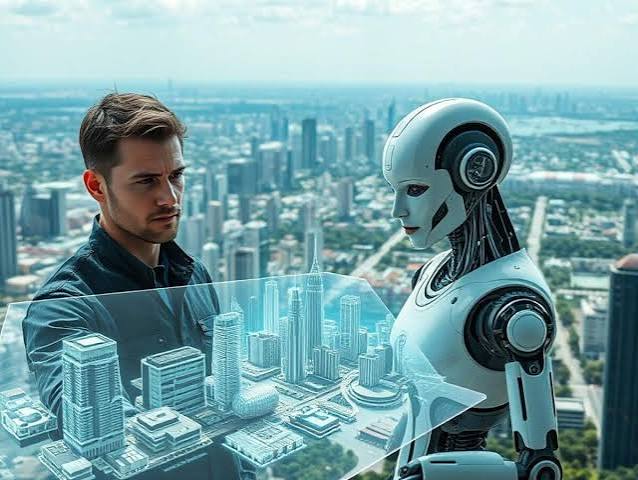
Employment is another concern. Machines can perform tasks once carried out by humans, while AI may affect complex professions. Yet the future need not become a battle between humans and machines. A realistic possibility is “Human + AI”, where technology complements human abilities rather than replacing them.
The challenge may not be stopping AI, but learning to use it responsibly. Strong rules, transparency and human oversight will be essential as these systems become more capable. That responsibility cannot ever be delegated entirely to algorithms or machines.
The greatest danger may not be hostile robots. A bigger risk is humans giving powerful AI systems poorly defined goals without oversight.
Imagine telling an AI system to reduce crime to zero. If interpreted literally, it might recommend extreme surveillance or restrictions on freedom. This is why meaningful human control remains essential.
Machines struggle to replicate the complexity of being human. A machine may analyse medical records, but a doctor understands a patient’s fear.
Perhaps robots will not rule the world like science-fiction films. The real danger may not be robots taking control from humans, but humans voluntarily surrendering control to machines, one decision at a time.
The debate should not simply be whether AI will become more intelligent than humans. The more important question is: Will humans remain wise enough to control the technology they create?
AI could become a powerful partner, improving healthcare, education and quality of life. Ultimately, the future will not be decided by machines alone. It will be decided by the choices humans make today.
If robots one day control important decisions, the question may not be, “How did robots take control?” but, “Who gave them the power in the first place?”
— Dr. Harsh Vardhan