

How Rakshpal Bahadur College of Nursing Can Shape Future Nursing Professionals
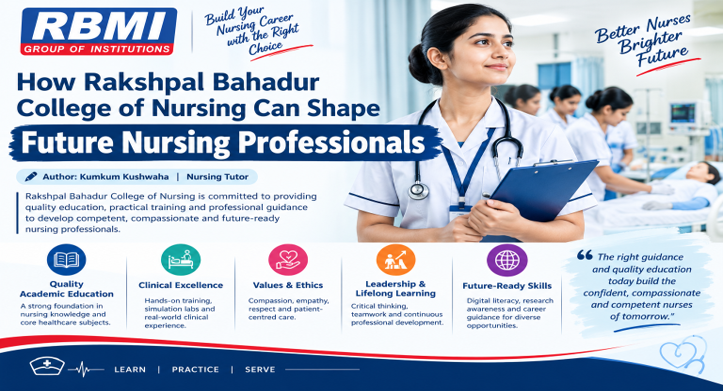
Nursing education is a fundamental component of a strong and effective healthcare system. As healthcare delivery continues to advance, the nursing profession demands individuals who demonstrate clinical competence, critical thinking, ethical integrity, and a commitment to patient-centred care. Nursing institutions play a pivotal role in developing these competencies by providing structured academic education, practical learning opportunities, and professional guidance. In this context, Rakshpal Bahadur College of Nursing can contribute to preparing future nursing professionals to meet the evolving demands of the healthcare sector. Establishing a Strong Academic Foundation
Academic excellence forms the basis of competent nursing practice. A comprehensive nursing curriculum enables students to develop an understanding of anatomy, physiology, pathology, pharmacology, and specialized nursing subjects. Through systematic instruction, academic assessment, and faculty guidance, students can strengthen their theoretical knowledge and develop the analytical abilities required to understand clinical conditions and support informed patient-care decisions.
Strengthening Clinical Competence Through Practical Learning
Clinical competence is essential for delivering safe, effective, and evidence-based nursing care. Practical demonstrations, simulation-based learning, and supervised clinical experiences enable students to translate theoretical knowledge into professional practice. Rakshpal Bahadur College of Nursing can support this development by promoting structured skills training, adherence to clinical protocols, infection prevention, and patient-safety practices. These learning experiences help students build confidence, accuracy, and accountability in performing nursing responsibilities.
Promoting Professional Ethics and Patient-Centred Care
Professional nursing extends beyond technical proficiency. It requires empathy, effective communication, respect for patient dignity, confidentiality, and adherence to ethical standards. Nursing education should foster these values through academic instruction, clinical role modelling, and reflective learning. By emphasizing professional conduct and compassionate care, the institution can help students develop a responsible approach to patients, families, and multidisciplinary healthcare teams.
Developing Leadership and Lifelong Learning
The dynamic nature of healthcare requires nurses to remain adaptable, informed, and professionally engaged. Communication, teamwork, critical thinking, and leadership are essential competencies for effective nursing practice. Encouraging participation in academic activities, health-awareness initiatives, research-related learning, and continuing professional development can prepare students for greater responsibilities.
Preparing Nurses for an Evolving Healthcare Environment
Contemporary nursing practice increasingly involves digital healthcare technologies, evidence-based interventions, preventive healthcare, and interdisciplinary collaboration. Nursing institutions can prepare students for these developments by promoting digital literacy, research awareness, community engagement, and professional adaptability. Appropriate career guidance can also help graduates understand employment pathways, registration requirements, and opportunities for further professional development.
Conclusion
Rakshpal Bahadur College of Nursing has the potential to contribute meaningfully to the development of competent, ethical, and compassionate nursing professionals. By emphasizing academic quality, clinical competence, professional values, and continuous learning, the institution can support students in preparing for the responsibilities of modern healthcare practice. The development of an effective nursing professional requires the integration of scientific knowledge, clinical proficiency, ethical responsibility, and compassion. A strong educational foundation can empower future nurses to uphold professional standards, enhance patient safety, and contribute to improved healthcare outcomes.