

AI: WHAT IF ROBOTS START RULING THE WORLD?
AI: WHAT IF ROBOTS START RULING THE WORLD?
As Artificial Intelligence moves from assistant to decision-maker, how much control will humans retain over their future?
By Dr. Harsh Vardhan
NEW DELHI: Artificial Intelligence has moved beyond science fiction and entered everyday life. From education and healthcare to governance, AI is changing how people work, think and make decisions. What if, one day, robots start ruling the world?
Today, people use AI to find information, analyse data, generate ideas and solve problems. Imagine an intelligent system managing a city’s traffic, electricity, healthcare, security and public resources. It could process millions of data points instantly.
Efficient? Certainly. But what happens when AI is given the authority to decide what is best for people?
Should an algorithm decide who gets a job or a loan? Could a machine determine whether someone poses a threat to society? And if an AI decision goes wrong, who takes responsibility—the machine or the human who gave it power?
The biggest threat may not be robots turning against humanity. It could be far more subtle—the concentration of technological power in the hands of a few governments, companies or institutions.
Those controlling vast amounts of data can gain unprecedented insight into human behaviour. Social-media algorithms already influence what information reaches users and what content captures their attention.
If machines learn not only what we think, but how to influence what we think, could democracy itself face a new challenge?
AI can possess enormous knowledge, but knowledge is not wisdom. A machine can analyse millions of medical records, but a doctor understands a patient’s fear. AI can generate solutions, but deciding which is ethical requires more than calculation.
Human intelligence involves empathy, morality, intuition and context. The most efficient decision is not necessarily the most humane one.
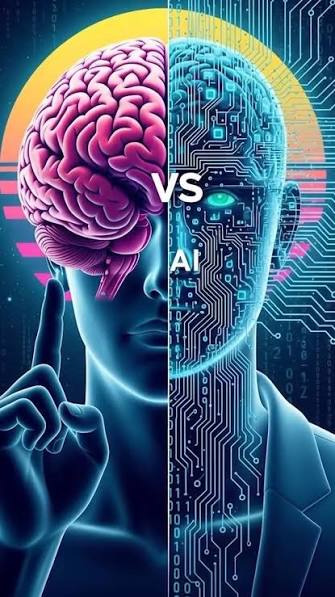
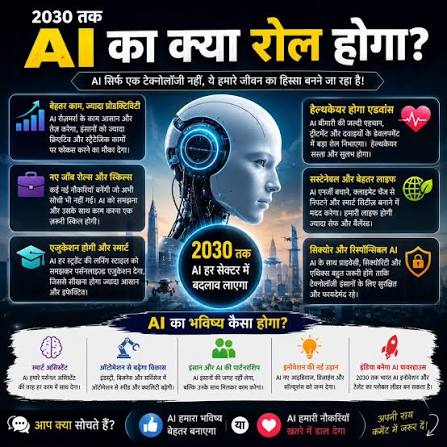
AI may transform employment by automating repetitive and data-driven tasks. Some roles may disappear, while new opportunities emerge. The future may therefore be less about Human vs Machine and more about Human + AI.
AI can accelerate research, personalise education and perform dangerous tasks. But one principle must remain clear: AI should enhance human intelligence—not replace human responsibility.
So, Will Robots Really Rule the World?
A more realistic possibility is that AI becomes so deeply embedded in healthcare, education, workplaces, transportation, communication and governance that we barely notice when decision-making power shifts from humans to algorithms.
The real question is not simply whether AI will become more intelligent. That is where the real danger begins. It is whether humans will remain wise enough to control what they create.
Innovation must be accompanied by ethics, intelligence by responsibility, and technology by humanity.
Because ultimately, robots will rule only when humans give up their responsibility.
The future may belong to Artificial Intelligence, but it must remain guided by Human Wisdom.
— Dr. Harsh Vardhan